Wag na init ulo baby

A study published in Nature strengthens the suggestion that long-term climate changes can affect violence. Hsiang, Meng and Cane, the authors of this paper, are from the Columbia University in New York, contrary to my ridiculous assumption that they're based in China.

They analyzed quantitative data of the El Nino phenomenon/Southern Oscillation (ENSO) from 1950 and 2004 which extend to both tropic and subtropic regions in  almost all continents except for Antartica and Europe.

They then found a one-way correlation that 21% of all civil conflicts are strongly associated with these inter-annual climate patterns.

It is easy to imagine how several uprisings could have ignited when the unforgiving weather supports this kind of hotheadedness. Behavior aside, it's an easy recipe for disaster: Prolonged El Nino negatively affects the crop yield and level of drought, which can precipitate into famine and strife.

Efforts in the previous years to correlate civil distress and weather patterns, for example rainfall levels, have been criticized for their weak experimental designs. Now, there is a well-accepted, if controversial, proof that human behavior leading to civil strife can be aggravated by weather temperaments.

Even Amaya, a fictional babaylan on popular TV, has to beg the heavens for rain.
image credits: iGMA.tv

Ergo, it is best to please the weather spirits and rain gods just like what our ancestors did. Nothing to lose.

Sources:
Hsiang, SM, Meng, KC, & Cane, MA. 2011. Civil conflicts are associated with the global climate. Nature 476, 438-441. doi:10.1038/nature10311.

Ottery, C. 2011. El Niño linked to civil conflict in tropical countries. SciDev.net. online article here.

Losing weight: fat chance

If you are overweight or obese, it is advised to cut 500 calories a day in order to lose half a kilogram off your weight. However, research evidence suggests that a flabby person will have a different metabolism compared to a muscular guy or a skinny one, and will therefore need varying strategies.

For example, a 23-year old like me who is 170 cm tall (5'7") and weighs almost 70 kg, should eat 2294 calories a day. However, a 110-kg version of me must eat 3080 calories per day to fend off his daily body needs, while a 90-kg clone would require 2729 calories.

Clearly, as a person becomes heavier, more calories must be cut from the diet, and adherence to diet should become stringent. This is not the usual case, however. Increasingly few of the overweight and obese subjects are strictly compliant with proper food intake. Fat chance.

Expectedly, those who have the willpower to resist gustatory temptations rarely become overweight and obese. More likely, those are the guys and ladies plastered on billboards with svelte, chiseled tummies.

image credits: Angel Locsin's facebook fan page

The mantra for the rest of your life therefore is to stay, rather than to become, slim.

Nonetheless, if you want to get a personalized realistic assessment of the steps needed to reduce your weight, you can visit Dr. Kevin Hall's site of the US National Institute of Diabetes and Digestive and Kidney Diseases at bwsimulator.niddk.nih.gov.

Source: The Economist. 2011. A wide spread problem. The Economist, August 27, 2011. page 71.

What a legacy

Steve Jobs's speech during the 2005 commencement exercise at Stanford resurfaced during the week that he resigned from Apple Inc. He left due to health reasons particularly pancreatic cancer.

He carried a hefty chunk of Apple's market cap when he left, but the guy still has some money left in Wall Street. He owns some Disney shares, because the guy started the era of profitability and critical acclaim for Pixar.


In this speech, he said: "I'm convinced that the only thing that kept me going was that I loved what I did. You've got to find what you love. And that is as true for your work as it is for your lovers. Your work is going to fill a large part of your life, and the only way to be truly satisfied is to do what you believe is great work. And the only way to do great work is to love what you do. If you haven't found it yet, keep looking. Don't settle. As with all matters of the heart, you'll know when you find it. And, like any great relationship, it just gets better and better as the years roll on. So keep looking until you find it. Don't settle."

Column Five Media chronicles the public life of Steve Jobs in this beautiful infographic.

image credits: the guys from Column Five Media

Flight of fancy

image credits: xkcd.com


Alternate game plot

image credits: xkcd.com

Elementary derivation

image credits: xkcd.com

Transient denial stage

idea by inspired: xkcd.com 

Priorities win again

image credits: xkcd.com

Sixth TED translation


TED2008, Filmed Feb 2008; Posted Oct 2008
Translated into Filipino (Pilipino) by Schubert Malbas
Reviewed by Polimar Balatbat

Modern communication during this decade has changed dramatically. I remember MIRC, an Internet Relay Chat (IRC) client for Microsoft Windows which was popular in early 2000 and was the mainstay chat system in internet cafes in Davao. I think this utility made the typing shortcuts and smileys popular, things like LOL, BRB, and =), but I never got to use it.

When I attended university in 2004, Friendster was the national craze, and there also was Multiply. After I received my bachelors degree, the advent of Plurk, Facebook, and Twitter kicked in.

Social networks have progressed so much in such a short period of time. I always believe that they will evolve into something greater in the future.

In this TED Talk, John G. Rives tells us of a modern, if a bit confusing, love story. Rives is a poet, author, and narrator on television shows, and speaks English, American Sign Language, Latin, Ancient Greek, and conversational French.

Fifth TED translation


TEDGlobal2011, Filmed Jul 2011; Posted Jul 2011
Translated into Filipino (Pilipino) by Polimar Balatbat
Reviewed by Schubert Malbas

Pick your poison: worms, viruses, trojan horses, keyloggers, rootkits, or spyware. Malware design is getting more sophisticated by the minute.

We are at risk of losing data we deem most valuable: our school work, our office files, our photo albums. This TED Talk by Mikko Hypponen reminds us to think of contingencies if ever we lose computer data, simple things like back-up, system scans, and firewalls.

Mikko Hypponen is the chief research officer of F-Secure, an anti-malware firm based in Finland and one of the most trusted in 2010 according to AV-Comparatives.

Fourth TED translation


TED2007, Filmed Feb 2007; Posted Jun 2008
Translated into Tagalog by Jaime Florentino
Reviewed by Schubert Malbas

Admit it: modern living is difficult without having a refrigerator at your home. Fresh produce from the market gets easily spoiled, so you either have to eat everything in one go, or you just have to buy processed or cooked food everytime, which kinda sucks.

Imagine if refrigeration was not available in health centers: practically all medicines and vaccines needing cold chain logistics system would be useless.

The first known method of artificial refrigeration was demonstrated by William Cullen at the University of Glasgow in Scotland in 1756, using a pump to create a partial vacuum over a container of diethyl ether, which then boiled, absorbing heat from the surrounding air. The experiment even created a small amount of ice, but had no practical application at that time.

In 1805, American inventor Oliver Evans designed a refrigeration system based on the vapor-compression refrigeration cycle, which has been and is still the most widely used method for air-conditioning and storage chilling.

Taking this a step further is Adam Grosser, a venture capitalist who thought of making a fridge that uses no electricity, but instead utilizes any indigenous cooking fire available including bits of wood or even camel dung. While still in the prototype stage, each piece of functional refrigerator costs as little as 25-40 dollars.

Grosser and his colleagues are still working on making them commercially available soon, but the seminal idea of a portable non-electric fridge is already impressive, and should be built upon by other engineers and scientists who are interested in making refrigeration accessible to everyone on the planet, with or sans electricity.

Through the looking-glass

My take on Mideo M. Cruz's Poleteismo Exhibit is simple: you are what you see.


What I see is this: the juxtaposition of Filipino religion, politics, and capitalism is ridiculous and is most unfortunate. Pundido na ang mga bumbilya: our contemporary society needs greater enlightenment. Primarily, therefore, the exhibit served its purpose: it makes the audience think. Mr Cruz has every artistic right under human laws, and he should be therefore acquitted.

It can be argued on the other hand that Mr Cruz committed sacrilege under Catholic laws, a sin that transcends ephemeral human authority. Remember however that we on earth were not given by Christ the ultimate authority to make judgments on others. We should not condemn Mr Cruz. We can leave Mr Cruz's eternal fate in the hands of God. Poor guy.

In the end, you are what you see.

Sizing Up Pulmonology

created image at: tagxedo.com
Since I got house-arrested for having shingles awkwardly placed around my left eye, I missed a week of cardiology and another week of pulmonology lectures. I'm still coming to grips with the concepts of pulmonary pathophysiology; having attended no plenary discussions makes it doubly difficult to understand.

If I were to survive the written and practical exams this week, it will be by God's grace. He knows how much I want this. Meanwhile, I'm hitting the sack first.

OFWS in the middle east

If I had been POEA administrator or DFA secretary, I would have banned all deployment to the Middle East and North Africa since Tunisia's succesful ouster of Zine el-Abidine Ben Ali in January of 2011, when the Arab Spring has since spread from Libya to Syria. It would have effectively reduced costs of mandatory evacuations in case of war in order to bring back OFWs.

A summary of infographics chronicling the revolution in the Arab world has been collected by the Economist below. The region itself is becoming increasingly volatile, due in part to a more liberal and digitalized youth demographic.


While the safety of OFWs must be a paramount priority, at the back of my head, I'm starting to think that this is their own undoing. Six months ago they could have sold their land ownership in the provinces so that they can secure a job overseas. Funnily, they are now asking the Philippine government to redeem them from the violent demonstrations and fierce fighting in the Middle East and the promise of livelihood back home. In this situation, I think nobody won.

Misunderstood


image credits: xkcd.com

Statistical bias


image credits: xkcd.com

West philippine sea


adapted: xkcd.com

Creepy discount code

image credits: xkcd.com

Smarter bedtime stories


image credits: xkcd.com

Next tourism secretary

With the current tourism department secretary resigning this August, the public clamor is palpable.

Several names have been floated as possible replacements: former Senator Richard Gordon, former Tourism Secretary Ace Durano, former Defense Secretary Gilbert Teodoro, former MMDA Chairman Bayani Fernando, and Camarines Sur Governor Villafuerte. A lot of them have earnest track records in efficiency in management. However, history suggests that many of them will have difficulty switching alliances to the current Philippine president in office. Alternately, any incumbent undersecretary or assistant secretary can be promoted to the Cabinet position as long as he or she has a winning vision for Philippine tourism.

We need a leader at the helm, more than ever. Consider the numbers first:

Number of foreign tourist arrivals, 2008-2010
from United Nations World Tourism Organization 2011 Report
BY COUNTRY OR REGION200820092010
Asia and the Pacific184,057180,936203,838
China53,04950,87555,665
Malaysia22,05223,64624,577
Hong Kong (China)17,32016,92620,085
Thailand14,58414,15015,842
Macao (China)10,61010,40211,926
Singapore7,7787,4889,161
Korea. Republic of6,8917,8188,798
Japan8,3516,7908,611
Indonesia6,2346,3247,003
India5,2835,1685,584
Taiwan (pr. of China)3,8454,3955,567
Vietnam4,2363,7475,050
Philippines3,1393,0173,520
Cambodia2,0012,0462,399


The Philippines should not compare itself with others, since that is crab mentality. However, when other neighboring countries have seen increasing statistics over the last 3 years while ours has become stagnant, shouldn’t this sound off the alarm?

Rather than to wade in the frustration of failures past, one way to exploit this numbers gap is to make visa applications more friendly! I don’t know how the immigration system works and if extortion is still rampant, but I’ve been through a horrible experience of extortion harassment from a male immigration officer in NAIA3 two or three years ago. There goes Filipino hospitality under the bus.

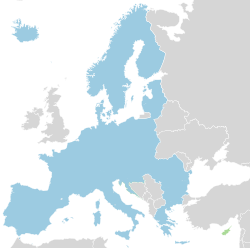
Well, how about discussing with other Southeast Asian countries the possibility of easing up cross-border controls for foreign arrivals? Europe, which attracts millions of tourist arrivals thanks to well-preserved historic sites, has a similar policy under the Schengen Agreement in 1985. The Schengen Area currently enlists 25 member-states, encompasses much of mainland Europe comprising 4.3 million square kilometers of land, and covers 400 million people. It’s like securing a single visa for inter-country travel into the entire Schengen area. Citizens from member states therefore do not need to bother with cross-border controls.

Schengen Area. image credits: Wikimedia

The Philippines has a lot of tourist spots and tourist festivals, yes, but they are physically far from each other, provided we are a fragmented archipelago. Sadly, even some of our functioning airports are dilapidated. It’s more difficult for an expatriate to experience the entire Philippines, when he or she can choose to stay in mainland Malaysia, Thailand, or Singapore where all famous destinations are reached by a single train ride.

Needless to say, in order to improve arrivals, any foreigner should first feel compelled to visit the Philippines, through quality ads seen on BBC, CNN, National Geographic, Discovery, or CNBC. For me, South Korea and Malaysia are doing a fantastic job. Many Filipinos watching these advertorials on TV are left scratching their heads: shouldn’t we at least spend our marketing money like they do?

Last time I checked, in chronological order, the most successful overseas themes we've had were Wow Philippines and Philippines: It’s More Than the Usual.


Second, it is pretty mandatory that tourists must feel safe. Therefore, pressing issues with kidnappers and terrorists must be properly addressed by concerned agencies aside from the DOT.

Lastly, we need a visionary leader ASAP. It’s not much to ask, since competent names are already put on the table. It is only then proper to ask you, dear Mr. President, to choose the successor wisely. Thank you very much.